Hi Everyone,
December was a lot quieter than recent months with 36 rescues attended, plus several releases.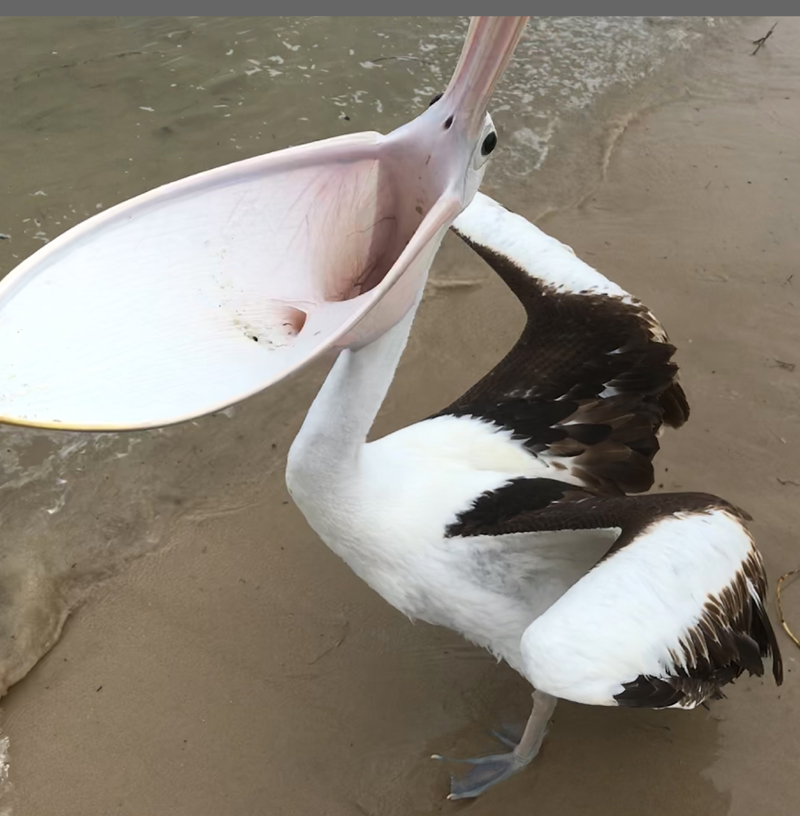
The lower number was due in part to some restrictions I’d made. These had become necessary because lots of people who learn about WBR from the website call without heeding the very clear message accompanying the phone number. It says … I rescue pelicans and swans, plus any species of bird that is fish hooked or fishing line entangled. Instead I can get calls at all hours from people wanting me to catch their budgerigar which has escaped up a tree. And here I am thinking … ‘go little birdie, enjoy your freedom’. Either way those rescues are not what I volunteer to do.
Very few rescue services answer calls, every time, within seconds, like Wild Bird Rescues does. However, I’m only willing to provide that level of service if callers respect my wishes. Fact is 80% of calls coming from the website have nothing to do with what I say I’ll do. Of course I could just say NO, but being a bit of a sucker I’ll often attend those rescues anyway. This can result in monthly callouts reaching the mid to high 50’s and that can become overwhelming. Change was needed.
I discussed this with Liz and Paul (on the Donations Committee) and both suggested that I let all calls go to message. I felt very uncomfortable about this idea at first, but it’s worked a treat. Callers must first listen to what WBR offers. Most respect the message when they hear it. They’re also given alternate numbers to call to get help for birds in different circumstances. This has quickly sorted the budgies from the swans and allowed me to focus on what I do best which is rescuing ‘flight capable’ birds.
I should add that donors like you can call me anytime, about anything. I always go the extra mile for people who support this rescue service.
OK, enough of that. Let’s get this show on the road.
Steaming Piles of ….
Do you remember Naples, the sub-adult Brahmini kite featured in a recent Facebook post? He was rescued by a MOP on Isle of Capri and then taken to Currumbin Wildlife Hospital. The vets found he had a slight fracture of the skull.  Two weeks after admission Naples was ready to go. I released him back on Isle of Capri and watched in despair as local ‘black and whites’ got stuck in and gave him a dreadful hammering. It was back to hospital, this time for a longer stay. A few days later he was joined by another juv Brahmini which the girls named Bari (even more Italian than Naples!).
After three weeks the pair were ready for a second release attempt. The question was … where the hell could I release them and be confident they wouldn’t get murdered by local birds, all of which hate raptors because of the threat they pose to their young?
Their BIG need was a reliable food source. Kites aren’t too fussy about what they eat, but they have to find food quickly or they lose condition and starve. I thought back a few years to when I caught a one eyed sea eagle at a soil manufacturing plant inland from Jacobs Well.
White-bellied sea eagles are huge and make juvenile Bramhinis look like canaries. Andrew, the owner of the plant, was an amazing bloke. Unable to read or write he’d designed and built much of the immense machinery himself. While at the plant I remembered seeing piles of offal being used to enrich the soil mixes. I also saw plenty of raptors; mostly whistling kites, there for the free tucker. Clearly this location offered advantages for two young, inexperienced birds in need of an easy meal. I ran the idea past CWH head vet Mic Pyne. He was enthusiastic.
Vet nurse Rene bundled the two into the car and I headed for Jacobs Well. Arriving at the plant Andrew suggested I follow along behind a truck full of offal which had just pulled in. Now, I can envisage following a truck driven by Elle MacPherson in a bikini, but a truck full of offal … well, that’s different. But then I’m just a humble poultry slave here to obey and follow orders, so off I went. After a short drive the truck stopped and began tilting its tray. I quickly placed the transport box containing Naples and Bari several meters away facing the area where this odiferous, steaming pile was about to land. As it spilled out onto the ground I opened the door and let ’em loose.
They were off! Bari was out first with Naples hot on his heels. Neither took one look at the offal, but that didn’t matter. It was there if they needed, with plenty more laying around. The best part was that although ‘black and whites’ were everywhere none bothered our young raptors. Bari alighted in a nearby tree. Naples soared towards the heavens and was last seen tracking south. I was concerned for him but Andrew reminded me that thousands of acres of surrounding cane fields are rich in mice, lizards and insects; all yummy raptor food. Hopefully the pair will do well.
Boti Boti
During a crappy week in December I had to rescue three pelis, all suffering from botulism. Sadly only one of those birds could be saved. The second was simply too far gone. Someone had spotted it out on Bird Island in the middle of Lake Orr, Varsity Lakes. Chantal from RSPCA took the call. Details were vague. Had she known it was a peli the call would’ve come straight to me. That would have left time to act before nightfall. By the time Chantal arrived it was late. The light was fading  and it was impossible to tell from the shore whether the bird was still alive. As there are no reliable services which can treat that illness overnight I decided to leave the rescue ’til morning
At 6am I hailed a pace boat used by the local rowing club and pressed them into service. Minutes later I had the peli in my arms. It looked dead … then it blinked. This was a positive sign, but with the illness so advanced I knew it had little hope. Poor thing was DOA at hospital. Even if discovered during the first 24 hours after onset of paralysis their chances are 50% at best. The third peli (above and left) which I pulled from a quarry lake at Steiglitz, was recovering nicely in hospital. Then a week into treatment and just one day before its scheduled release, it too dropped dead. The Twins (www.twinnies.com.au) say that botulism can rebound a week or two after apparent recovery, often with fatal results. To save only one out of the three was very disappointing, but not unusual. The organism, which birds pick up from the water, is a potent toxin. For those who are unaware it’s the base of Botox which instantly paralyses muscles when injected under the skin, causing those muscles to relax.
Some Days are HOT
Boxing Day was super busy. Three of the six rescues were BIG, involving much time and effort. It all started at 6am and I didn’t get home until 7pm.
 The first was a young swan seen standing on a beach in Mermaid. Caller Temika, newly arrived on the Goldie, could see fishing line around the bird’s foot. The poor thing must have been in great pain because it stood still and allowed me to grab it.
The hook I found in the webbing of her left foot was the least of her problems. Turns out line attached to that hook was tied to another hook buried deep in her flank. Every time she extended her left leg it pulled that upper hook further into her flank, opening a wound the size of a 50c piece. I removed both hooks (above) then rushed her to hospital.
Happy to report she’s doing well.
Temika and young Bentley. ‘Mum I thought you said this was a duck duck. Looks a bit big to me!’
From Currumbin it was back to Main Beach, then into my dinghy for a fast trip out to the Broadwater sandbars off  Labrador. I was searching for a peli with a nasty lure lodged in its pouch. The treble hooks of the lure had stitched the bird’s pouch together near its face, preventing it from swallowing. If that wasn’t bad enough fishing line trailing off the lure had wrapped around its head and across its mouth, partially covering the creature’s gullet. There could only be one outcome, unless found and caught quickly.
I’d already made one attempt to catch it the day before on Xmas morning. This was unsuccessful and left me feeling resentful. Surely on God’s birthday it wouldn’t have been too much for him to grant me this one pelican? Hadn’t I been a good boy all year?
In order to catch most birds you have to be able to manipulate them (move them around). For that we use food. However, this bird would rush in and grab a piece of fish, then scurry off into the water and try to swallow it. She had no hope of course because the hooks and line were blocking her throat, but she persisted anyway. This kept her from returning to shore and my waiting snare. Super frustrating!
Now it was day two and I couldn’t find her. She wasn’t with the main pack so I checked the adjacent sandbanks and a few lone pelis which were floating around, but still no sign. With a sinking feeling (no pun intended) I drove the boat a kilometre north. Finally, there she was, standing with half a dozen mates on a sandbank offshore from Charis Seafood’s. Phew!
Things hadn’t gotten any easier. She was still wary and hanging back. She’d come in and grab a fish-frame then head straight offshore with no hope of swallowing it. This took up a lot of time. I was down to my last couple of fish-frames and becoming desperate. Time to change tactics. Loading the net gun I coaxed the pack of birds back into the water then threw the last of my fish into the shallows 7 meters in front of where I stood. At the last second she risked an approach. Together with another peli they swam towards the fish. I risked a long shot and got lucky. Nailed them both. Pelis are big birds and two of them can put up quite a struggle. Finally had her which was all that mattered. She was quickly relieved of the lure and the line entanglement. Minor chafe wounds were doused in betadine, then she was released, finally able to enj oy her first meal in days.
Minutes after arriving back at base I got a call from Tallai about SnagglePuss, the little ibis that some idiot had shot with an arrow. It took a net shot to secure him too, then it was another mad dash south to Currumbin Wildlife Hospital. SnagglePuss recovered quickly despite the 90cm shaft of the arrow passing through his thigh and abdomen. Four days later he was running around looking good (well, as good as an ibis can look). Hopes were high, but sadly he was found dead on the morning of the fifth day. Crap outcome. Just too much internal damage.
A fourth rescue involved the little chap below right reported hanging by fishing line 4m up a tree in Main Beach. He was inaccessible to my reach and setting up tree cutting gear takes time. I don’t have time to muck a round, so I mounted the kerb and drove into the park then jumped up on the roof with a knife and slashed the line. He was quickly transferred onto Dr. Rowley’s Operating Table (the back of my car). The entanglement was tight but his feet were undamaged. Very lucky. A few minutes later he was back in the air with his noisy minor family.
Never Volunteer on a Wildlife Hotline
Calls for entangled ibis were still way down in December, thank goodness. Sadly it means I don’t have any ibee pics to show you. I know this will come as a bitter blow to those dedicated ibis lovers among you (don’t pretend you’re not), so I’ve decided to tell you an ibis story instead.
This happened some years back. I’d just spoken to an operator on the Wildcare Hotline. She said she was nervous. It was her first day and she hadn’t done this kind of work before (Tough gig, I tell ya). I wished her luck and the conversation ended. That’s when evil thoughts crept into my mind. I know this was very mean but I couldn’t resist. I phoned her back. Putting on my very best distressed elderly lady voice I said, ‘Oh please, please, you’ve got to help me. A pack of those horrible ibis birds just landed in my garden and they’re attacking my poodle!’
Silence.
It was some time before I heard … ‘um … oh … um … ah … um’. I didn’t let this go on too long before confessing and begging forgiveness. She wasn’t angry, just profoundly relieved at not having to deal with a situation which she had no idea how to deal with. Poor thing. It was pretty funny though.
Mouse
At right is Mouse. Poor Mouse looks like skeleton but in fact most of what you see are feathers stuck together by ooze escaping from a hole in his neck. He was in big trouble. I first caught Mouse two years earlier when he was spotted in the Broadwater Parklands by (now) RSPCA Officer Dani. He had a gaping hole in his neck. I took Mouse to SeaWorld but I don’t think he got comprehensive treatment and was released too early, before his neck fully healed. Every six months or so I’d spot him. He seemed to be coping so I let things be. I regret that now. Last month, when Mouse turned up at Peter’s Fish Market, Owen the filleter gave me a call. I went straight around and grabbed him. The hole in his neck was now as bad as when I’d first caught him. Food would slip out when he ate and he was quite emaciated. I rushed him to Currumbin Wildlife Hospital but sadly it was too late. Mouse was too far gone and couldn’t be saved. At least he’s no longer suffering.
Fangio
Early in the month I got the best news ever. It concerned a swan on a golf course with a suspected broken leg. There’s no fixing that.
The caller was an elderly chap (can’t recall his name) who’d asked me to assist. He told me to meet him at the Golf Course’s Pro Shop. Turns out there were two Pro Shops. Things got a bit tense when we couldn’t find each other and were arguing about who was where. Eventually we figured it out, but by then I was thinking … ‘I’ve got a right one here.’ Heavy weather was closing in. The sky was already black and the wind howling as he pulled up in his cart. I climbed in and he took off down the path … fast. The heavens opened. Thunder, lightning and torrential rain. We could hardly see out the front of the cart. Didn’t slow him down one bit.
Ever see that movie ’10’ staring Dudley Moore and Bo Derek? There’s a scene where Moore, in pursuit of Derek, flies to a Caribbean Island where she’s holidaying. With his clothes crumpled and jet lagged from a ‘red eye’ flight plus too much alcohol Moore is dropped off at the resort. With bright morning sunshine in his eyes he’s greeted by pretty girls in hula skirts. Someone presses a big, fruity cocktail to his chest, resplendent with colourful umbrella, then he’s shoved into a golf cart which careers off down the winding walkways at breakneck speed. Imagine the look on his face. It was hilarious.
Leaving Bo Derek out of the equation the only differences between Dudley’s experience and mine was firstly the weather … no balmy sunshine for me, instead a tropical thunderstorm. Second was the fact that nobody had handed me a life-saving cocktail which I desperately needed. My driver was in his element, careering around blind corners almost up on two wheels. I clung for grim death to my long handled capture net which was outside the vehicle, thinking any minute now I’m gonna take out a Japanese golfer. Above the din of the storm and with his peddle to the metal Fangio was yelling, ‘I’m legally blind you know!’ All I could think was … ‘F___ me! How do I get into these situations?’
The bird wasn’t at the 3rd green, or the 4th; oh no, nothing that easy. It was in a pond at the very far end of the course near the 18th hole. Water levels were rising fast. After what seemed like an eternity we arrived. I was soaked. It was still pissing down. On the plus side … at least the swan was there, with her partner. But she wasn’t having a bar of me. Her leg was cactus … unable to weight-bear at all. As I approached she panicked and half dragged, half flew herself 10 meters across the ground and into the main lake. I told my caller, ‘I can catch her, but it won’t be easy and it could take days.’
In the end I made the difficult decision to leave her. On the evidence presented she’d be euthenased if taken to hospital. My caller was happy with my decision although I made it clear her chances of a good recovery were slim. He promised to keep a close eye on her. For now she’d remain in the wild with her mate. I had no doubt that given the choice she’d prefer that to being given the ‘green dream’.
Why was I so happy to get his next call six weeks later? He said, ‘Rowley, that bird is walking fine. In fact she’s perfectly well’.
What an amazing outcome. Clearly the leg couldn’t have been broken. Rather, I suspect she’d been hit by a golf ball and suffered an excruciating corked muscle, or similar. She was fully lame at the time. Whatever was going on then, after some time recovering in the wild, she’d come good!
Hero Vets
 This is the last report of the year so I want to say a special thanks to all vets who’ve helped Wild Bird Rescues in 2017. Every Gold Coast vet provides free assistance to native wildlife, which is very generous, but some really go the extra mile. My two favourites are Dr. Kevin at Gold Coast Vet Surgery on the Gold Coast Hyw at Surfers/Broadbeach, and Dr. John at The Point Vet in Paradise Point. Bear in mind these small business owners have to pay for premises, staff and materials all out of their own pocket, meaning their contribution to wildlife comes at significant personal cost.
I took nearly a dozen birds to The Point Vet during 2017. All were given quality, professional treatment by Dr. John and his staff, all free of change and without any wait. What great service that is.
At left, nurse Caitlan in Gold Coast Vet Surgery blow drying a waterlogged crow I’d just rescued from a nearby canal. He lwas lovin’ it!
Dr. Kevin at Gold Coast Vet Surgery has been helping me with injured birds for more than a decade. His staff are always welcoming. The surgery helped hundreds of native birds in 2017. Recently DR. K performed major surgery on Rudolph, the corella featured in a December post on Facebook.
With the help of the Robina Fire Brigade I’d cut Rudolph down from a limb 8 meters up a tree where he’d hung upside down for more than 24 hours. When I eventually got my hands on him we found a deep entanglement of fishing line around his left ankle. It’d cut almost to the bone. His foot and toes were black and appeared dead. I sent him into care with Jenny from Wildcare. Almost immediately circulation and movement returned to his ‘dead’ left foot, but then things reversed and within days toes started dropping off. Clearly that foot was dying. What to do?? Rudolph had the answer and began gnawing off his foot. Euwww. It’s hard to know how this strategy would have played out in the wild. Having gnawed dead flesh and bone back to the stump would he survive? Quite possibly, but no guarantee of course.
We had to make a decision. Hospitals are very reluctant to relieve a bird of a foot and then send it out one legged. They argue that all of the creature’s weight will get transferred onto the one surviving foot and the extra pressure can (and often does) result in sores under the pad, known as Bumble Foot. These sores are extremely painful. Arthritis can also develop. Wanting to spare the bird any future problems it’ll usually be put down. Is this the right way to go? No doubt in some cases the answer is yes.
I discussed Rudolph with Dr. Kevin. We were both of the opinion that being a wild parrot, super agile and dexterous, bumble foot and arthritis may not be a big issue for him. Even if they did eventuate Rudolph might first enjoy many, many good years.  Dr. Kevin very kindly handed Rudolph a life-line by offering to remove his manky foot.
I was delighted when I heard the operation went well (at left).
Dr. K very skilfully amputated Rudolph’s foot just below his ankle leaving a small articulated stump to help distribute pressure more evenly. Seven days on and Rudolph is flying around Jenny’s aviary learning to use his new stump. We’re keeping our fingers crossed but so far it looks real good! Rudolph could be back out there with his mates in a week. They’ll all say, ‘wow, nice stump Rudy, where’d you get it? No doubt Rudolph will loudly squawk the praises of the Gold Coast Vet Surgery, and so do I.
A quick tally of rescue numbers for 2017 showed that WBR helped 526 sick or injured birds. More than 100 of those were swans. I also performed dozens of special releases, necessary when a bird has unique requirements. All of those rescues were possible because of your kind help. Capture Reports are sent to you for 12 months in appreciation of this and show how your generosity is helping. Often I send reports long after 12 months has passed, but just like rust, which Neil says ‘never sleeps’, nor do rescue costs. If you haven’t donated for a while and would like to continue receiving reports (let’s face it, you’d miss my sense of humour) please go to www.wildbirdrescues.com.au/donations and make a contribution.
Thank you to all donors and to Liz and Paul on the Donations Committee. I hope everyone has a peaceful and prosperous New Year.
Rowley
Pres. WBR Gold Coast